Have you ever been told you’re crooked or collapsing in your position?
Do you feel like your brain and body are disconnected as you attempt to do what your trainer is instructing you to do?
Equestrian performance consulting focuses on helping equestrians improve their understanding of their bodies in order to better communicate with our horses. The truth of learning is that there are multiple components – motor control, proprioception, neuromuscular patterns – they ALL affect our performance that day.
The majority of us have a side that is weaker and a side that is tighter in comparison to the other side. These differences can lead to altered motor patterns and dysfunctional tissues. Our muscles can become inhibited from pain or disuse. Previous injuries also contribute to these altered motor patterns and can sometimes lead to further pain and injury. Equestrian sports are some of the most difficult sports as not only do we have to contend with analyzing and positioning our own body, we also have to effectively analyze and communicate with our horse – an animal that produces a lot of momentum and has its own instincts. Have you ever had a moment where what you think happened and what your trainer tells you happened are not the same at all?
Riding is phasic in nature. Each gait can be broken down into phases, and the way riders use their muscles is also phasic. Failure to understand these phases often leads to gripping with one muscle group or using the wrong muscle group. This is then reflected through our horses with behavioral problems as well as poor movement. Riding is being able to absorb shock yet stay mobile – we have to know when to hold and when to release. The ultimate goal of a rider is the elusive ‘independent seat’, where one is able to sit securely in the saddle while individually controlling our hands and legs separately from each other.
Accomplishing this gives us the ability to be precise with our aids, giving us effective communication with our horses.
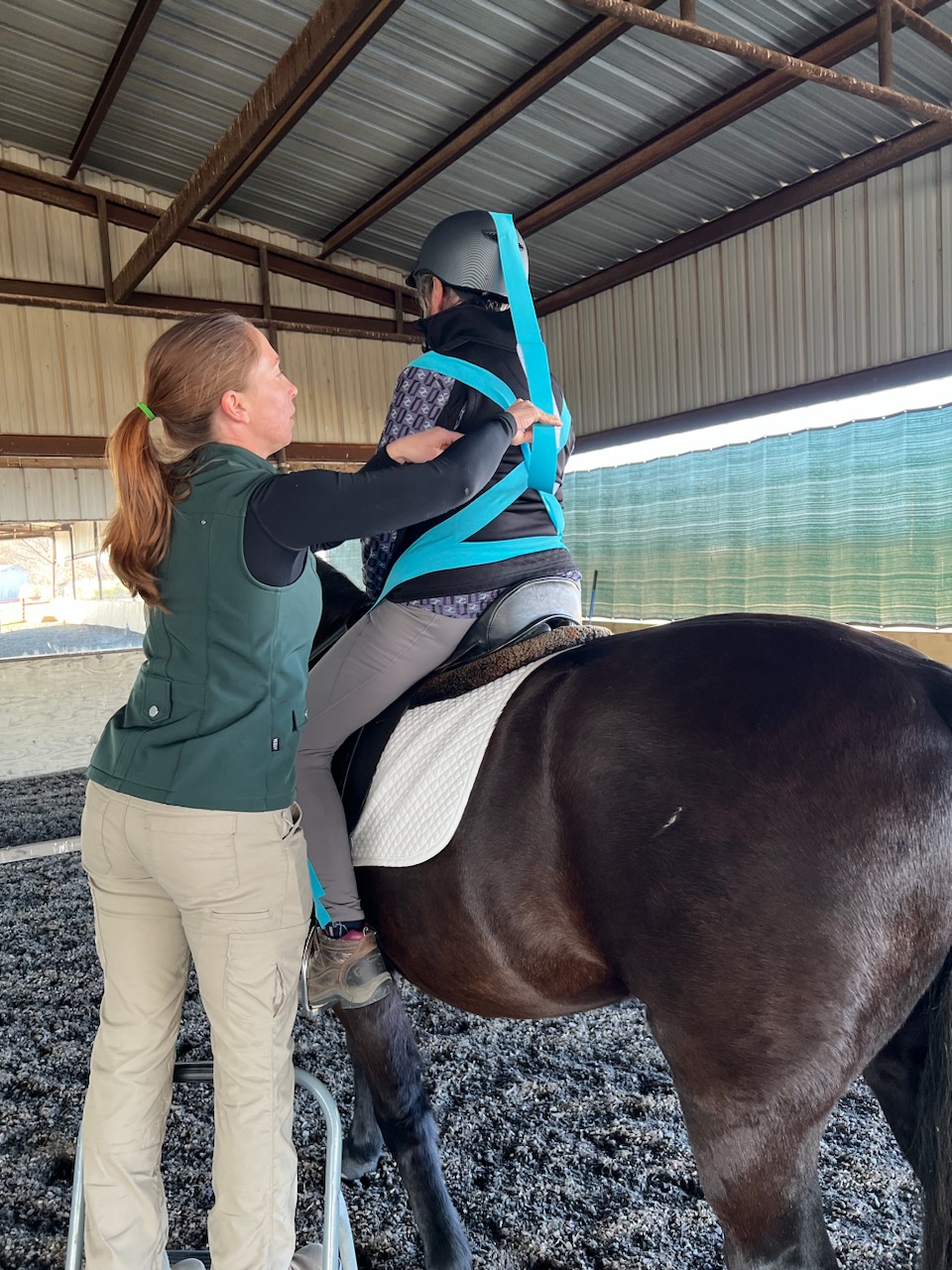
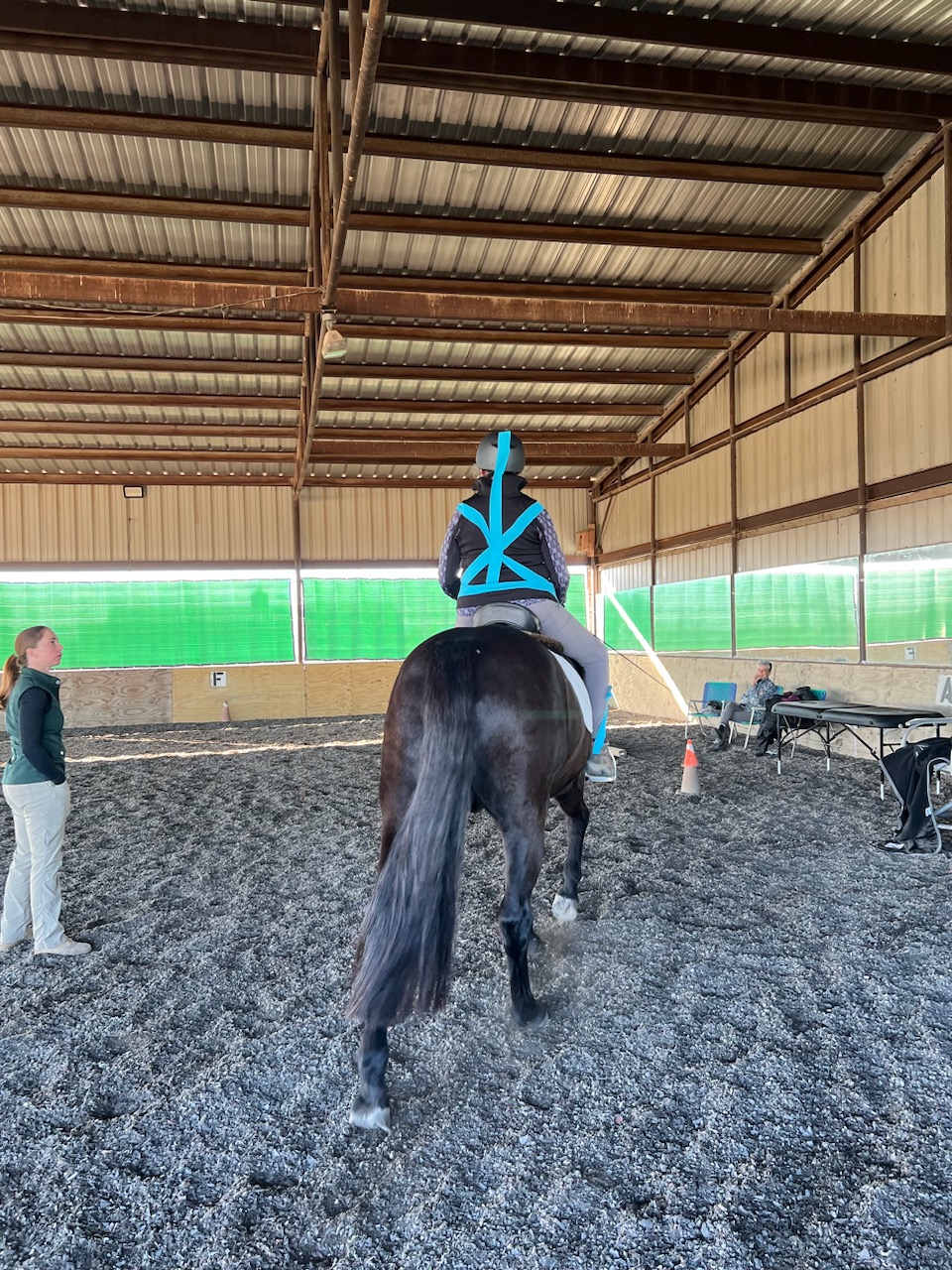
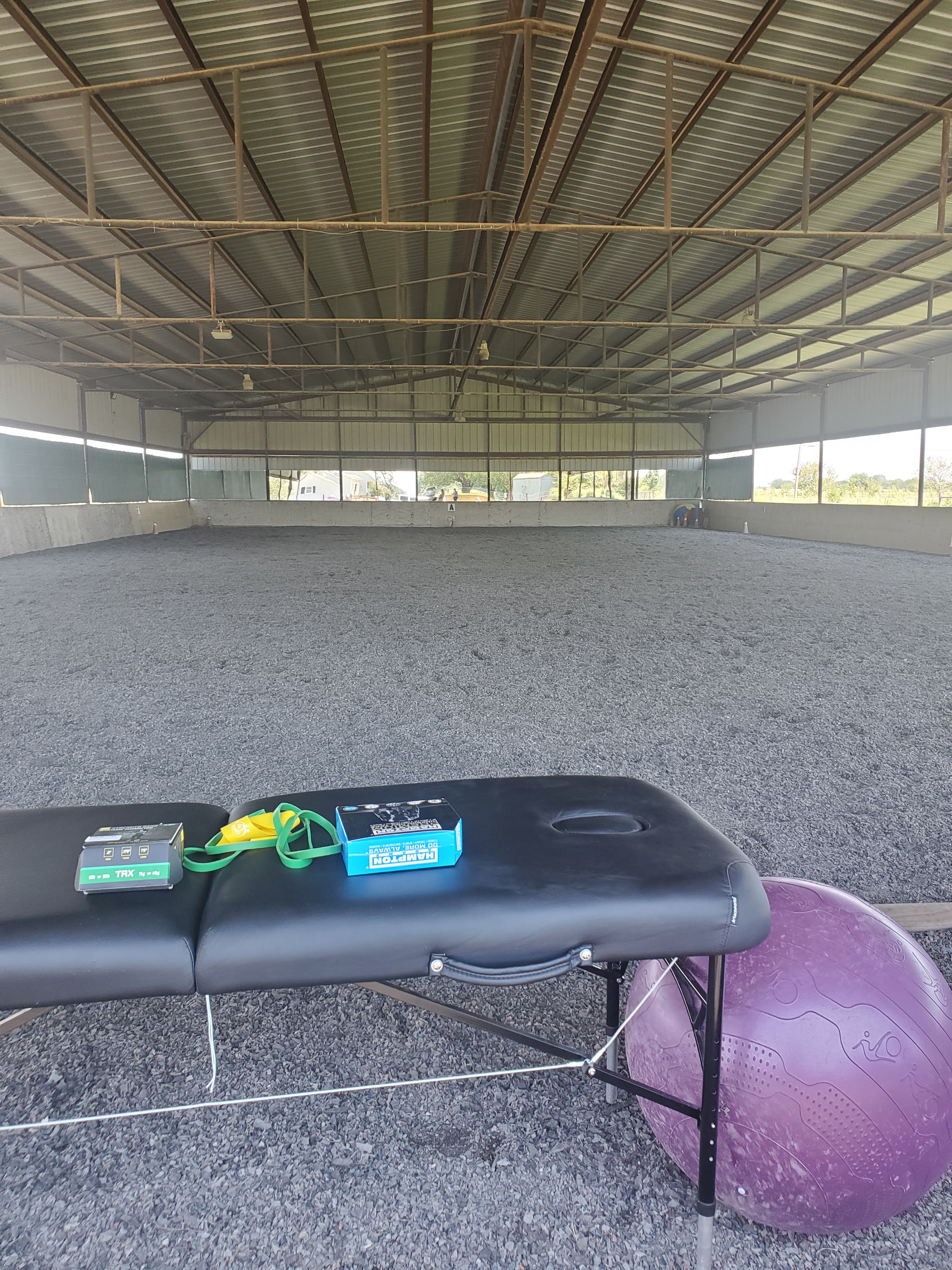
Largely based on the Testt Method developed by Andy Thomas with additions from my own years of experience as a physical therapist, (and backed with the empathy that comes with years of my own failures and successes) performance consulting offers a hands on approach to help riders understand their bodies and eliminate the frustration and road blocks that often occur with riding. Strength, mobility, and motor control deficits are assessed off the horse, then those changes are facilitated while on the horse to help integrate those changes for correct spatial awareness and movement patterns. The end result is more self aware riders, ultimately improving the welfare of our horses as we learn to ride with improved harmony.
 Partners in Motion